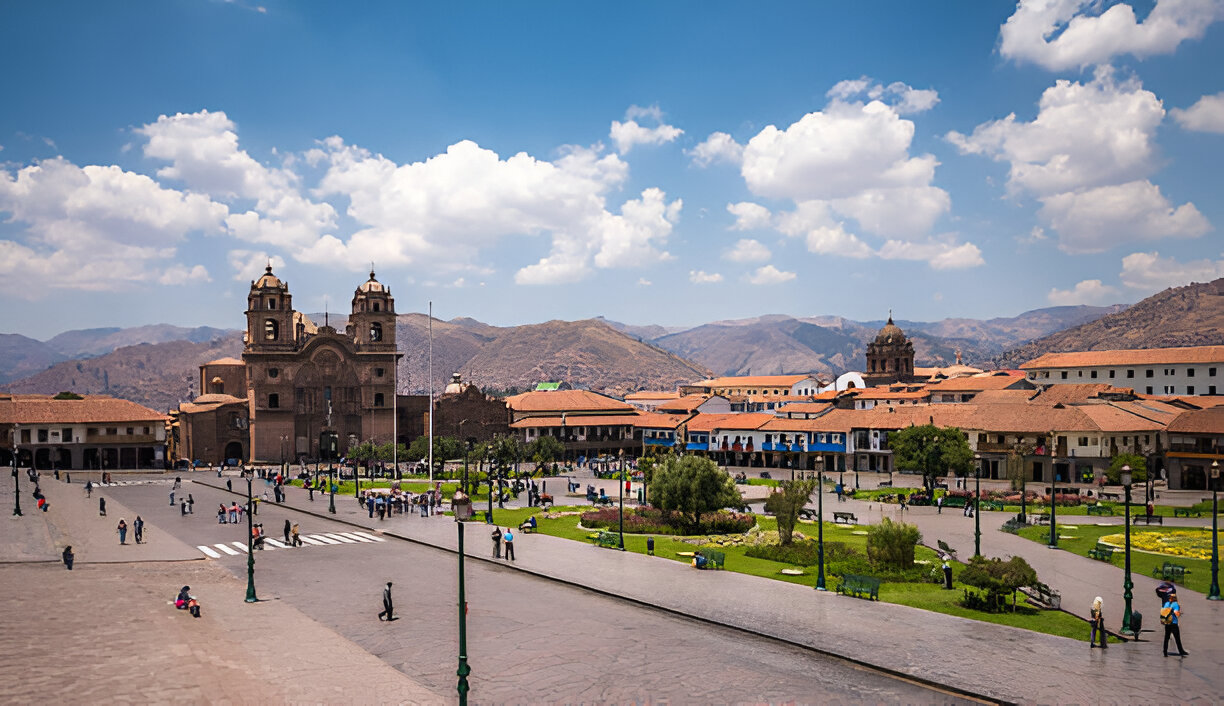
Plaza de Armas is where Cusco happens. The square was the ceremonial heart of the Inca capital before the Spanish rebuilt it as a colonial plaza, and both layers are still visible: Inca foundation walls below, carved stone colonial arcades above.
The two anchors are the Cathedral (built on the site of Viracocha’s palace, finished in 1654) and La Compañía de Jesús (Jesuit, 17th century, built on Huayna Capac’s palace). The famous “Last Supper” painting inside the Cathedral — a cuy on the plate instead of lamb — is one of the better-known examples of Andean colonial art.
Around the plaza, the first-floor balconies hold restaurants that charge for the view; the better food is a block or two off the square in San Blas. Try the lomo saltado at Chicha, the ceviche at Fiesta, the alpaca at Pacha Papa.
The plaza is also the start point for most Cusco walks. San Pedro market is five minutes west, Qorikancha ten minutes south, Sacsayhuamán a steep 25-minute climb north. Inti Raymi fills the plaza every June 24.
Peruways can bundle city tours, trains to the Sacred Valley and timed-entry Machu Picchu tickets.