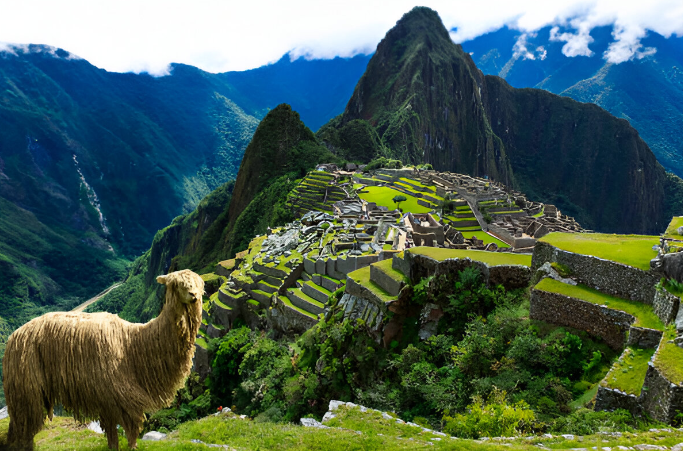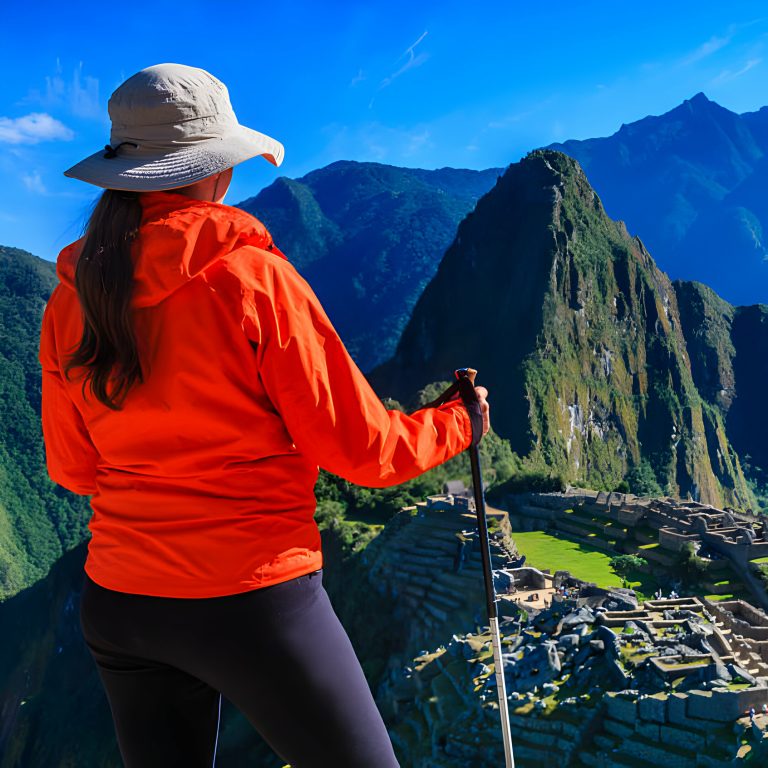
Cusco and Machu Picchu together make the backbone of almost every first trip to Peru, and most travellers run them as one stretch rather than two separate trips. Both are at altitude — Cusco at 3,400 m, the citadel at 2,430 m — so a sensible itinerary spends two or three nights acclimatising in the city before moving down into the Sacred Valley.
Cusco was the capital of the Inca Empire for roughly a century, and its grid still shows it: the colonial churches sit on Inca foundations, the Sacsayhuamán fortress above the city still has its three-tier zigzag walls, and the San Pedro market a few blocks from the Plaza de Armas is the easiest place to eat lunch for ten soles.
From Ollantaytambo in the valley, the train to Aguas Calientes runs 90 minutes along the Urubamba. From Aguas Calientes, Consettur buses climb to the citadel. The whole chain — hotel pickup, train, bus, entrance ticket, licensed guide — is what Peruways books in one checkout, which is easier than booking four operators separately.
Plan Cusco and Machu Picchu together with Peruways and keep the moving parts under one booking reference.