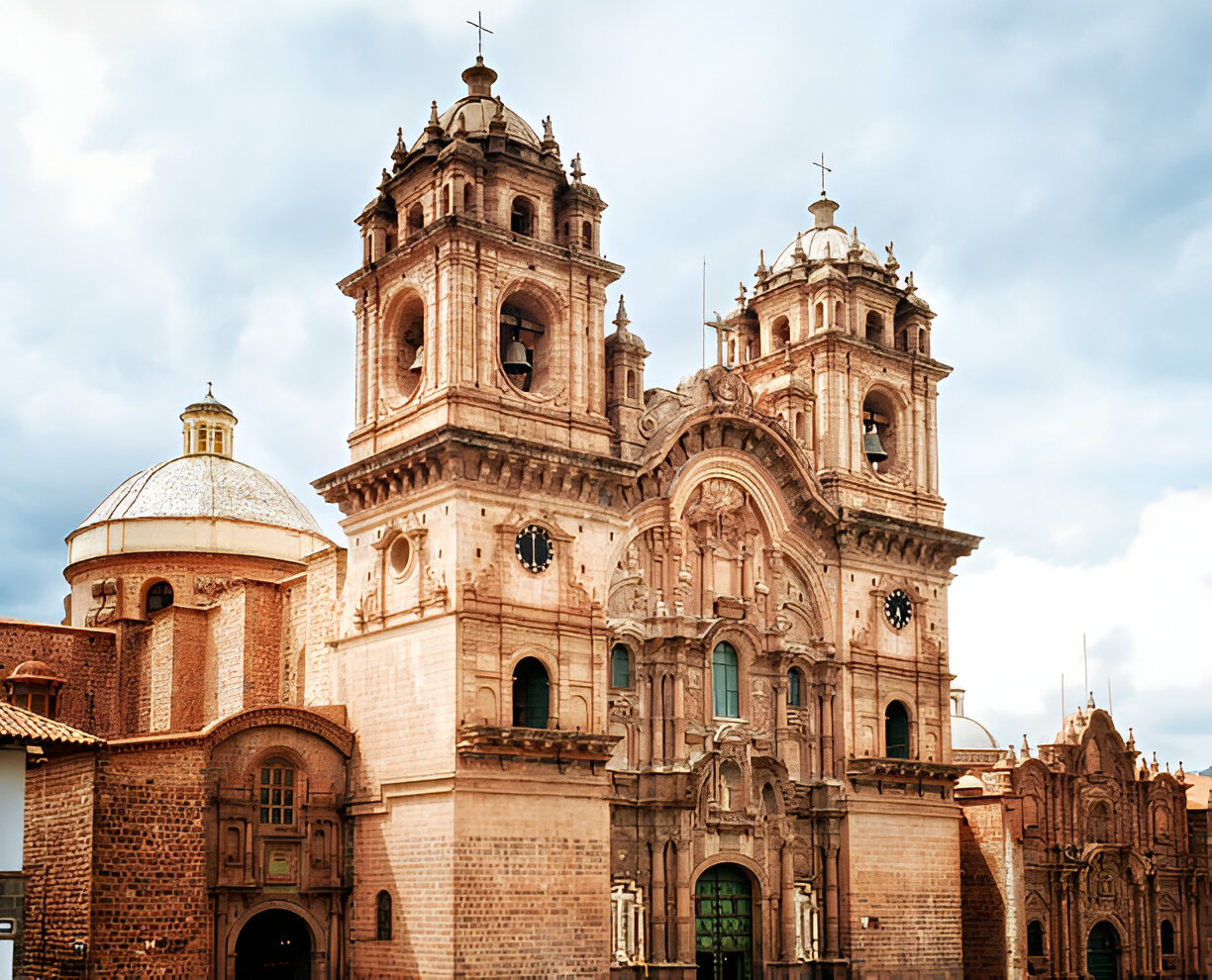
The Cusco Cathedral sits on the north side of the Plaza de Armas and is one of the central buildings in the city. It was built between 1560 and 1654 on the foundations of the Inca palace of Viracocha, which is one of the reasons it reads the way it does — colonial Baroque architecture laid directly on top of Inca stonework. It’s part of the city’s UNESCO listing.
The exterior is heavy stone with carved pilasters and three main doors. Inside, the main altar is finished in silver from the Potosí mines, and the side chapels hold a serious collection of Cusco School religious painting from the 17th and 18th centuries. The most-cited piece is Marcos Zapata’s “Last Supper,” where the figures are eating cuy — guinea pig, the regional dish — rather than lamb.
If you’re in Cusco, the cathedral is a required stop. It opens most days, and the guided tours (included with the entry) go deeper into the colonial politics and the Cusco School paintings than you’d get walking it alone.
Nearby, Qorikancha — the Inca Temple of the Sun — sits five blocks south of the plaza under the Santo Domingo convent, and the San Blas neighborhood is a short uphill walk from the plaza if you want to see the artisan quarter afterwards.
To put together a Cusco itinerary with the cathedral in it, Peruways runs guided city walks that cover the main stops and sort out the entry tickets.
Build the cathedral into your first day in the city — it’s the single clearest view of how the Inca and the Spanish layers of Cusco fit together.