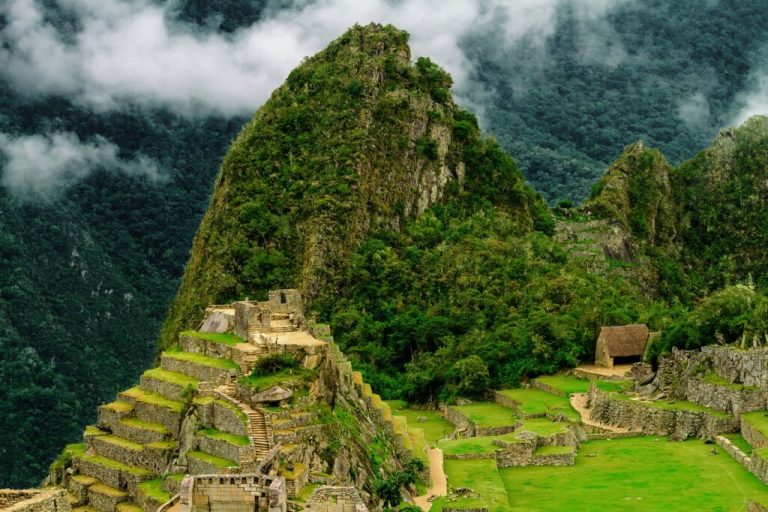

Machu Picchu sits at 2,430 m on a ridge in the Vilcabamba range of the Andes, roughly 110 km north-west of Cusco. Hiram Bingham, led there in 1911 by farmer Melchor Arteaga, published the first photographs of the site in 1913 and gave it the current name (the Quechua term the Inca themselves used is unknown).
The citadel was built under Pachacuti around 1450 — probably as a royal estate rather than a city — and abandoned a century later, during or just after the Spanish conquest. The site covers roughly 32,000 hectares and includes the Temple of the Sun, the Intihuatana ritual stone, the Sacred Plaza and the agricultural terraces that still drain two metres of annual rainfall without eroding.
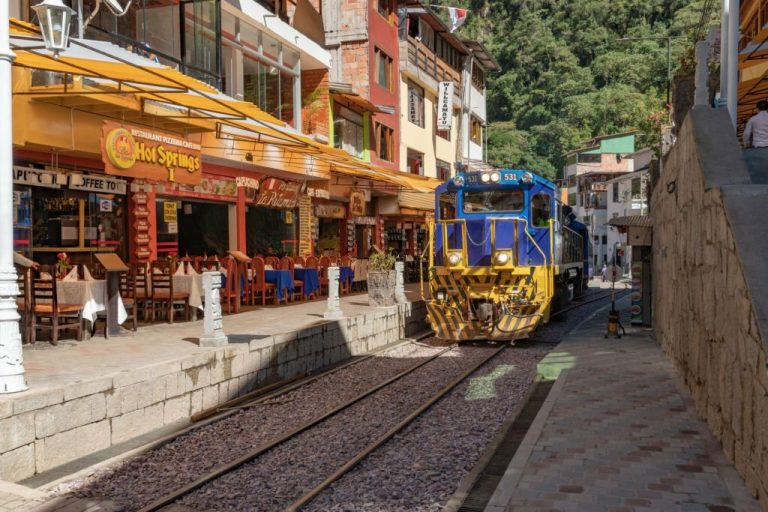
You reach it by train from Ollantaytambo (90 minutes) or Cusco–Poroy (seasonal, two hours) to Aguas Calientes, then the Consettur bus 30 minutes up 13 switchbacks to the gate. Entry is by circuit — five routes, each with its own timed entry window.
Peruways books train, bus, entrance and licensed guide in one checkout at Peruways.