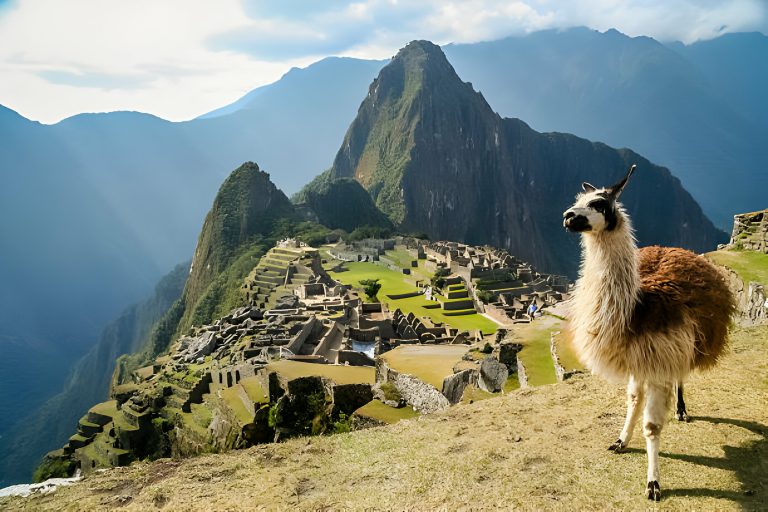
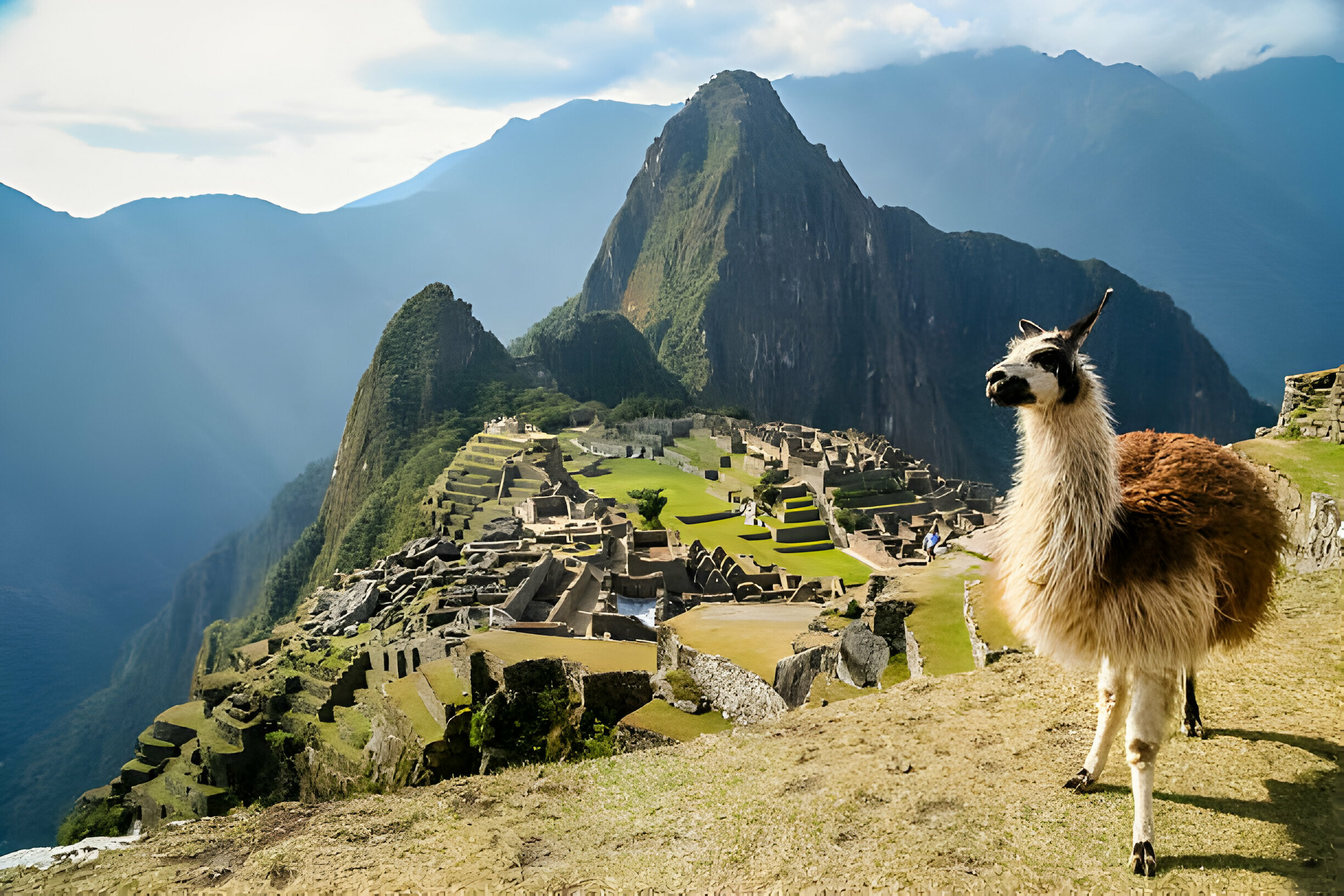
Machu Picchu has been studied for over a century — Hiram Bingham’s 1911 report, three subsequent major archaeological digs, satellite mapping, LIDAR surveys — and the citadel still gives up new readings. Not mysteries exactly, but construction and ritual details that get clearer every decade.
Peruways’ guided tours cover what’s actually known. The Intihuatana ritual stone was long described as an “astronomical clock”; current reading is that it was a seasonal observatory, with shadow angles mapping to solstice dates. The Temple of the Condor is more clearly a ritual altar than the “sacrifice site” earlier guides called it. The Temple of the Moon on the far side of Huayna Picchu is one of the quieter sacred complexes most visitors miss.
The Inca Bridge trail — a 30-minute walk from the main plaza — gives you the back-door defensive route the Incas built to control access to the citadel. A gap in a stone path along a sheer cliff, originally crossed on removable wooden planks.
Intipunku (the Sun Gate) gives the citadel at a distance, approached from the east — the same angle Inca Trail walkers see it from on day four. An hour’s walk each way from the main plaza.
Peruways runs guided visits with licensed Peruvian historians who stay current with the archaeology.