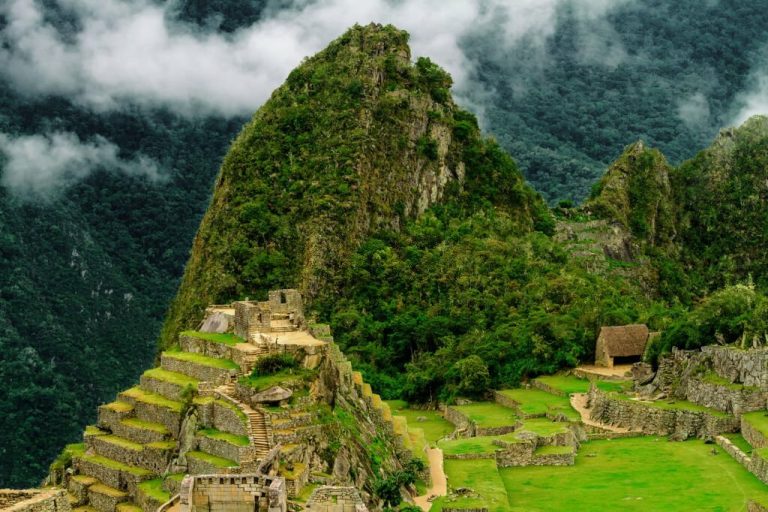
Cusco — sometimes spelled Cuzco — sits at 3,400m in the Peruvian Andes. It was the Inca capital, and it still shows: colonial buildings are mounted directly on Inca stone foundations, and the street layout follows the original Inca grid.
Spanish and Inca architecture overlap everywhere. The Plaza de Armas, with its arcades and the Cathedral (built 1559–1654 on top of an Inca palace). Qorikancha a few blocks south — the Temple of the Sun with the Santo Domingo convent built on it. The Inca walls at the base are some of the finest stonework in Peru.
Beyond the ruins, Cusco functions as the practical staging city for the Sacred Valley and Machu Picchu. San Pedro market has food stalls (quinoa soup, chicharrón, ceviche de trucha), textile stalls, and the usual produce. Lomo saltado and cuy chactado are the Cusqueño staples; try at least one. Pisco sours work with the altitude.
Trains and buses run from Cusco to Ollantaytambo, Aguas Calientes, and the start points for the Inca Trail and Salkantay. Through Peruways, you can bundle the whole chain in one booking.
Cusco is where any Peru trip effectively starts — history, altitude, and the launching pad for everything downstream.