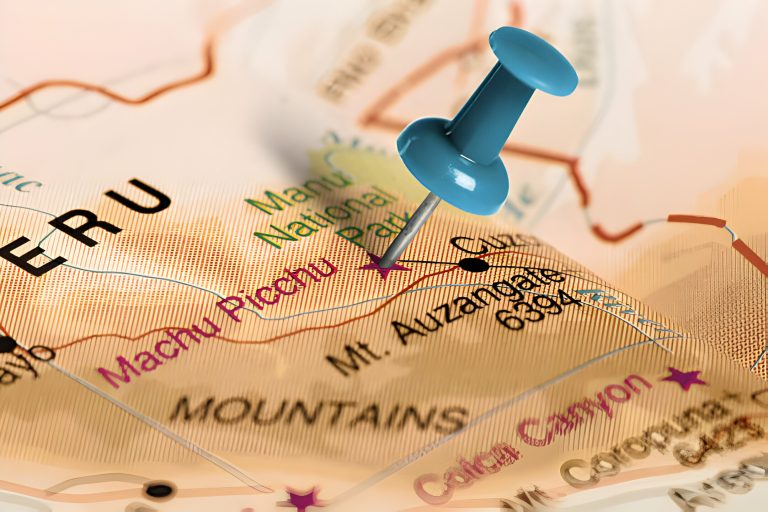
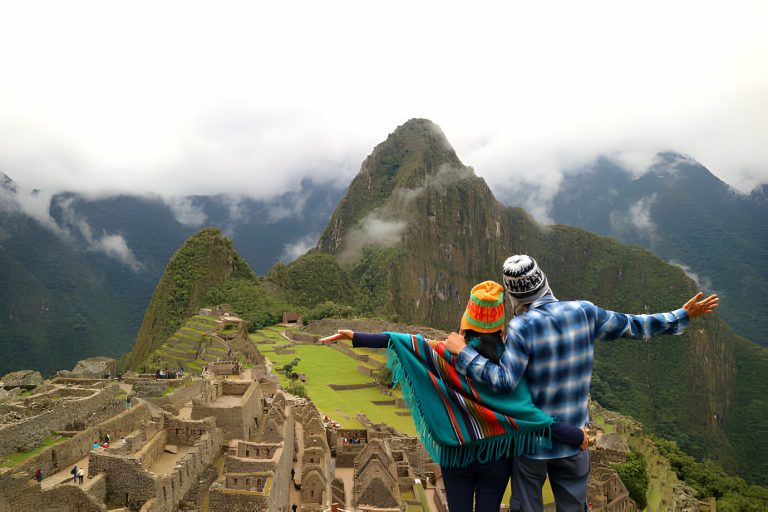
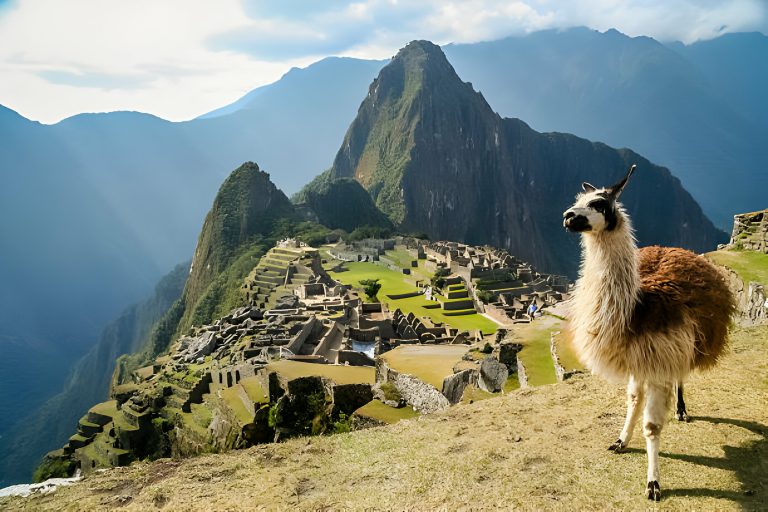
Machu Picchu sits at 2,430 m in the Peruvian Andes, built around 1450 and abandoned a century later during the Spanish conquest. Hiram Bingham’s 1911 expedition brought it to international attention, though local Quechua farmers had known about it the whole time. UNESCO added it to the World Heritage list in 1983. Peruways runs guided visits.
Getting there
The standard route is the train from Cusco or Ollantaytambo to Aguas Calientes, then the Consettur bus up to the citadel entrance. The alternative is the four-day Inca Trail, which arrives through the Sun Gate at dawn. Peruways handles both.
What’s on-site
On arrival Peruways’ licensed guides walk you through the main architectural zones — temples, agricultural terraces, residential clusters, ritual stones. The site was likely built as a royal estate for Pachacuti and contains the empire’s finest surviving stonework.
Key stops
- Intihuatana stone: a carved outcrop used as a solar observatory. The angle of its pillar aligns with the sun at specific times of year.
- Temple of the Sun: a semi-circular ashlar wall built over a natural cave (the Royal Tomb). The upper window catches the June solstice sunrise.
- Royal Tomb: the chamber beneath the Sun Temple, likely a ceremonial space rather than an actual tomb despite the name.
- Sacred Plaza: the central ceremonial square, bounded by the Three Windows temple and the Main Temple. Administrative center of the citadel.
- Sun Gate (Inti Punku): the stone archway above the citadel where the Inca Trail enters. Dawn solstice alignment with the Sun Temple below.
Peruways’ guided tours work the context into the walk — Inca cosmology, construction technique, the political role of the royal estate. The stones alone don’t explain themselves.
Booking
Daily visitor caps and circuit rules make advance booking essential. Peruways handles the entrance ticket, the train, the bus, the hotel, and the guide — one booking, one confirmation.