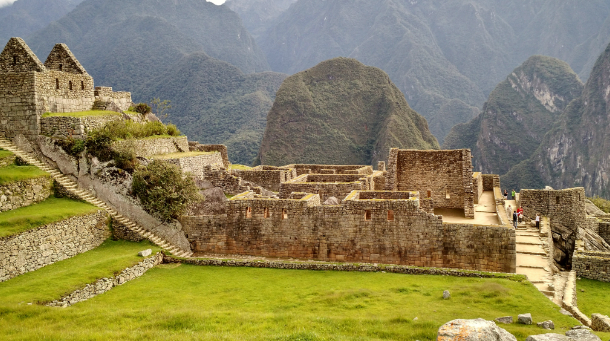

The stone steps of Machu Picchu do more than connect its temples, terraces and residential quarters. Carved into the Andean bedrock with the precision that defines Inca masonry, they trace the lines of a UNESCO World Heritage Site where every risers once carried a priest, a stonecutter or a ruler up through the citadel.
Practically, the steps let visitors move between the agricultural and urban sectors — climbing from a quarry to the Sacred Plaza, dropping to a fountain, cutting across the terraces. Symbolically, they mark the ascent that Inca cosmology attached to high places, a slow progression towards the hanan pacha, or upper world.
Walking them today, you pass the ritual fountains fed by the citadel’s hidden water channels, the lookouts that frame Huayna Picchu, and the quiet plazas where ceremonies once took place. The grades are steep in places; good footwear matters.
Peruways runs guided climbs through the site with local guides who read the stonework in context — why one staircase lands where it does, which block was shaped from the mountain itself, what the carved outcrops in the Royal Tomb are thought to mean.