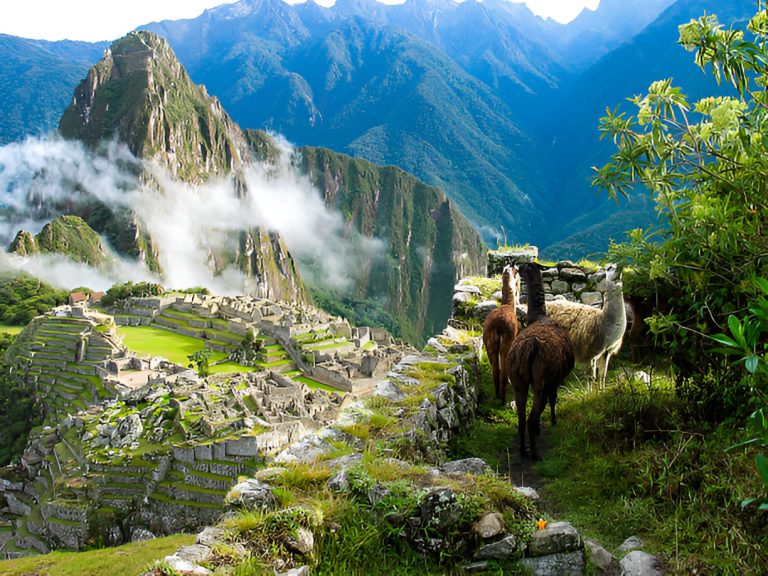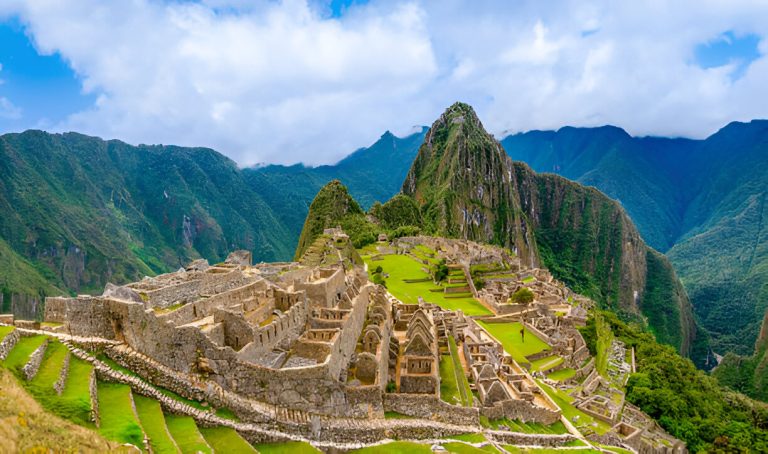

Machu Picchu’s stone steps are its connective tissue. Carved from local granite with the fit that marks true Inca work, they bind the terraces, the temples and the residential blocks of this UNESCO site into a single, climbable whole.
Each flight serves a practical job — moving water-bearers, farmers and priests between levels — and a ritual one. Climbing in Inca thought was a form of approach, a way of drawing closer to Inti and the mountain apus that watched over the valley.
Follow the steps today and you pick up the same route the people of the citadel used five centuries ago. You pass ceremonial fountains, carved outcrops and the viewpoints that open onto the Urubamba gorge far below.
Peruways guides lead the climb at a measured pace, pointing out which stones align with the solstices, where the quarries sit, and how the Incas moved blocks weighing many tons across the ridge without wheels or iron tools.