Ollantaytambo sits in the Sacred Valley at 2,792 metres — lower than Cusco, which makes it a better place to acclimatise — and its train station is the main departure point for Machu Picchu. The town itself is one of the few still laid out on its Inca grid, with running water in the stone channels of the pre-Hispanic streets.
1. The archaeological site. Rising directly above the town, Ollantaytambo’s fortress holds enormous terraces, the unfinished Sun Temple on the upper platform, and the quarry across the valley the stones were dragged from. Pachacuti built it, and his forces beat the Spanish here in 1537 before withdrawing to Vilcabamba.
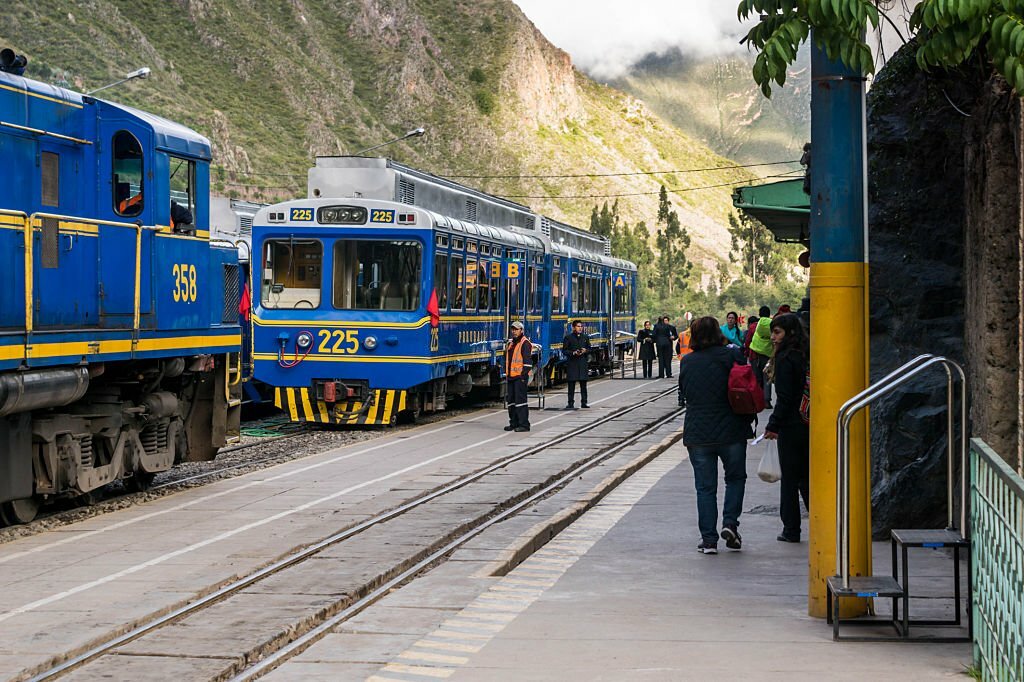
2. Why the station matters. PeruRail and Inca Rail both run frequent services from Ollantaytambo to Aguas Calientes. Taking the train from here, rather than Poroy near Cusco, cuts about 90 minutes off the ride and skips the slower switchbacks.
3. Train classes. From the Vistadome and 360 with panoramic windows to the Belmond Hiram Bingham for the top-end option, you choose the class to match the budget. The route follows the Urubamba through narrowing cloud forest.
4. The town. Cobbled streets, a lively Plaza de Armas, textile stalls, and small restaurants built into colonial houses. Chicha, quinoa soup and roast cuy are easy to find.
5. The ruins at close range. Climbing the fortress terraces at sunset, you look across to the carved face of Pinkuylluna — the storehouse ruins on the opposite cliff — and down into the colonial grid.
6. A living Quechua town. Weavers, farmers and chicheras work much as their grandparents did. Market days bring produce down from the surrounding villages.
7. The market. Textiles from the Patacancha valley, ceramics, dried herbs and silver work, with better prices than Cusco’s San Pedro market.
8. Site management. Entry is included in the Boleto Turistico; recent restoration work has cleaned the walls without over-reconstructing them.
Taken together, Ollantaytambo is a town that deserves a night rather than a transfer. Book your tickets here.