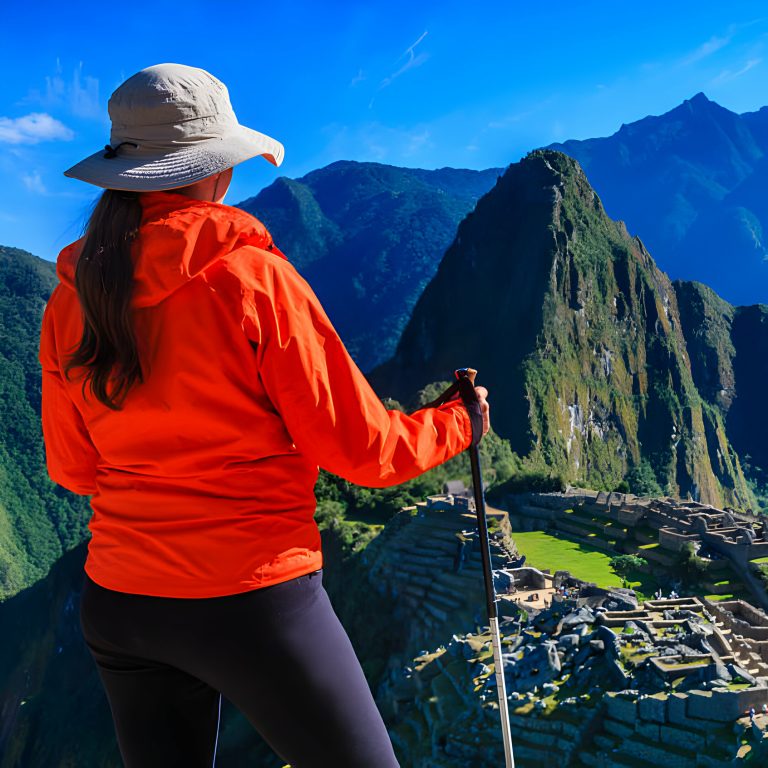
From the right angle — specifically, from a point on the Hiram Bingham road about halfway up — the Machu Picchu ridge resembles a human face in profile, lying on its back. The nose is Huayna Picchu, the chin is the main citadel ridge, the eye is a notch in the rock near the top. The resemblance is deliberate in local legend and coincidental in the geology.
The face is natural, carved by millions of years of erosion along the fault lines of the Urubamba batholith. The illusion only works from one direction, so it’s easy to miss on the Consettur bus unless you know to look for it on the way up.
Local Quechua tradition reads the face as the sleeping Inca — a protective apu watching the citadel. Scholars read it as geomancy: Inca architects may have deliberately sited the citadel to align with the natural rock profile. Either way, the alignment is part of why the citadel sits exactly where it sits.
Peruways’ guides can point out the viewing angle on the bus up or on the walk-up trail from the river. For a full tour that covers the hidden features of the site — the Face, the Inca Bridge, the Intihuatana shadow pattern — see Peruways.