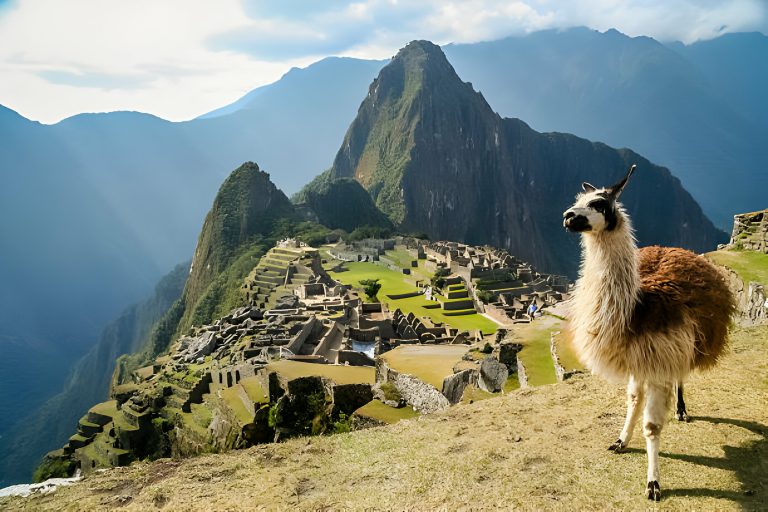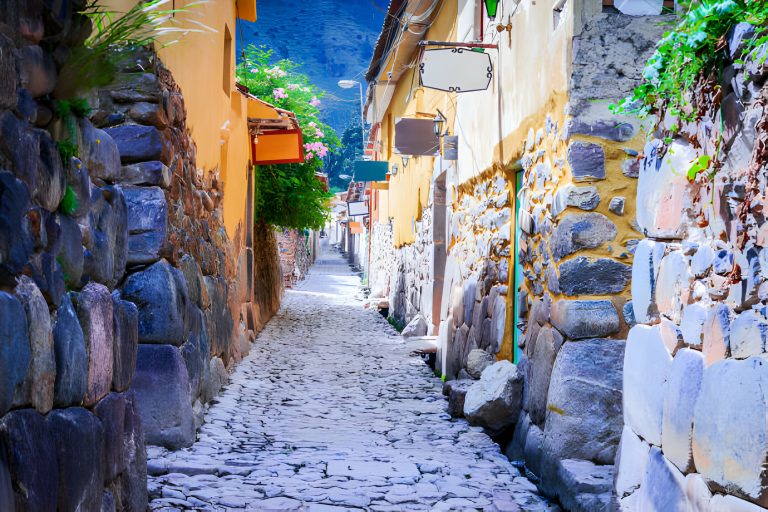
Machu Picchu’s stone steps are its connective tissue. Cut from the local granite with the fit that defines Inca work, laid without mortar between the temples, terraces and residential blocks, they still carry the same foot traffic they did in the 15th century.
They had a dual purpose. Practically, they moved water-bearers, priests and farmers between levels of the city. Ritually, climbing itself was part of the architecture — the ascent drew the walker closer to the hanan pacha, the upper world of Inca cosmology.
Walk them today and the sequence still works: ritual fountains along one line, carved outcrops along another, lookouts that open onto the Urubamba gorge far below. The gradient is steep in places and the stone polished smooth; grippy shoes help.
Peruways runs guided climbs with local guides who read the stonework in context — the quarries, the solstice alignments, the fit of blocks that have held through five centuries of earthquakes.