Pyramids usually bring Egypt to mind, but the Andes have their own. The Inca built pyramidal platforms across what is now Peru that look nothing like Giza — stepped, mortarless, fitted stone-on-stone — and still puzzle archaeologists today.
1. A different kind of pyramid:
Inca pyramids are not tombs. They are stepped platforms built from precisely cut stones that lock together without mortar, a construction method that has survived five centuries of Andean earthquakes.
2. What they were for:
Purpose varied by site. Some were ceremonial platforms used in religious rituals; others served as administrative seats or astronomical lookouts aligned to solstices and star risings.
3. Pachacuti’s hand:
Pachacuti, the ninth Sapa Inca, launched the empire’s great building period in the 15th century. Several of the pyramidal structures at Pisac trace back to this reign and his vision of reshaping the sacred landscape.
4. Acoustics and ritual:
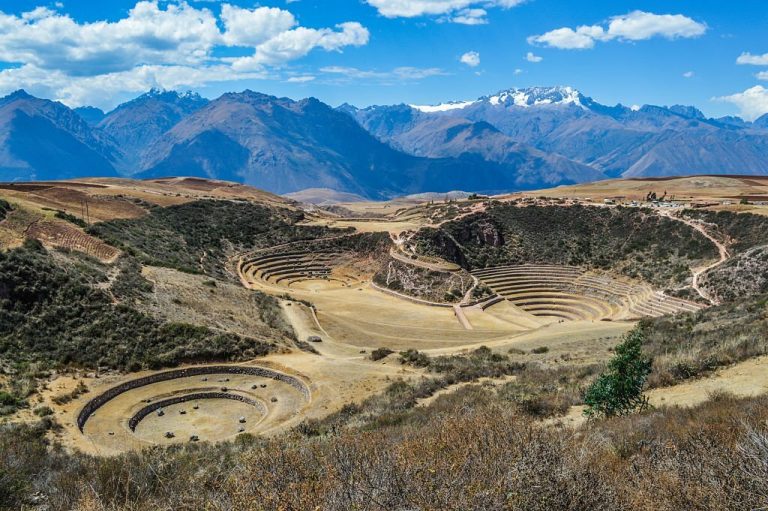
At Moray, the circular terraced depressions produce distinct echoes. The pattern has led researchers to argue the site hosted ritual music, with its sound engineering as deliberate as its stonework.
5. Sacred alignment:
Orientation mattered. Most Inca pyramids line up with cardinal points and celestial events, a built-in link between architecture and the Andean sky.
6. Pisac in the Sacred Valley:
The best-known example sits at Pisac, above the Sacred Valley near Cusco. Agricultural terraces, residential quarters and a ceremonial sector climb the ridge, crowned by a pyramidal platform.
7. Ollantaytambo:
Famous for its fortress, Ollantaytambo also carries pyramid-like terracing and ceremonial plazas. Here the Inca folded sacred platforms directly into their defensive architecture.
8. Open questions:
How the massive blocks were cut and moved, what each site actually did on its calendar, how deeply ritual ran through the design — much remains unresolved.
9. Preservation:
Weather, erosion and visitor traffic are the main threats. Conservation teams balance protection with the research and tourism these sites depend on.
Inca pyramids stand quietly in the high Andes, witnesses to a civilization whose engineering and cosmology are still being pieced together. Each new study adds a line, rarely a conclusion.
Book here.