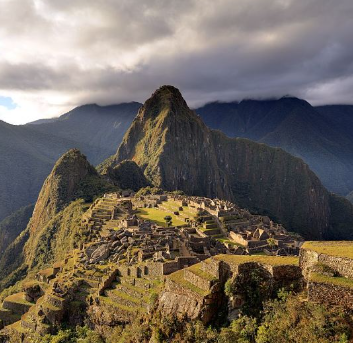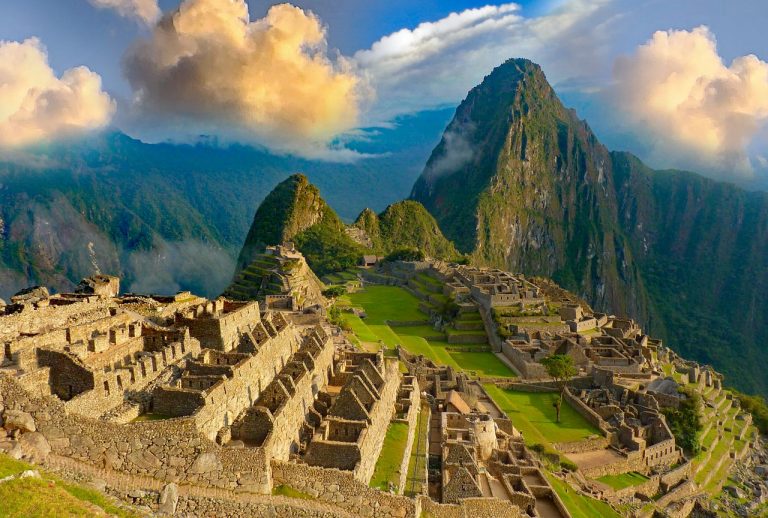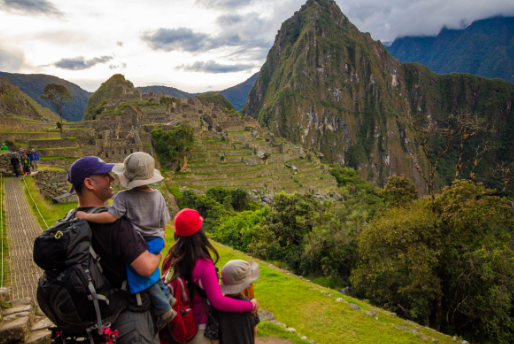

Walking Machu Picchu is mostly walking stairs. The Incas built the citadel on a steep ridge, which meant stone staircases everywhere — terraces, temples, housing sectors, and the two mountain trails above the site all connect through stepped paths.
The steps vary wildly: some are shallow and easy, others are tall, uneven, and worn smooth by five centuries of use. The main circuits move through the agricultural terraces, past the Intihuatana ritual stone, and across the Sacred Plaza — each stage opens on a different view of the site and the valley.
At 2,430 meters, the air is thin enough to matter on the longer climbs, which is why most first-time visitors underestimate how tiring a few hours at Machu Picchu actually is. For the two add-on peaks — Huayna Picchu (2,693 m) and Machu Picchu Mountain (3,082 m) — the stairs get much steeper and much longer. Both require separate permits.
For prep, acclimatization time, and ticket booking, Peruways covers the planning side.
The staircases aren’t just the way to see Machu Picchu — they’re part of what you’ve come to see. Each one is a piece of Inca engineering that’s still functional five hundred years after it was cut.