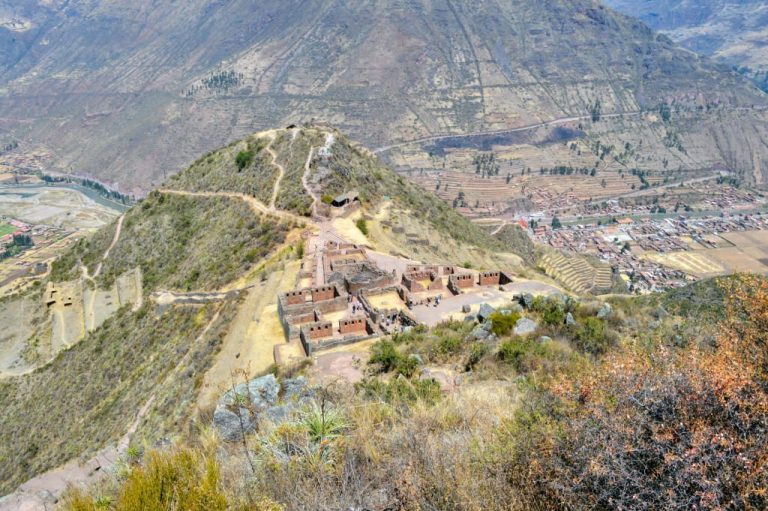

The Torreon, often called the Temple of the Sun, is the semi-circular stone tower at the upper end of Machu Picchu’s urban sector. Built directly over a natural granite outcrop, it is the clearest surviving example of ritual-astronomical architecture in the citadel.
1. The stonework. The curved outer wall is some of the finest Inca masonry on the site — polished granite blocks that fit without mortar, cut to follow the curve of the natural rock below. The Spanish called this style “sillar” work, and it was reserved for the most important religious buildings.
2. The solstice window. One of the two trapezoidal windows in the Torreon frames the June solstice sunrise, which strikes a carved line on the natural rock at the centre of the chamber. The Incas used it to mark the start of the agricultural year and the Inti Raymi festival in Cusco.
3. Ritual use. The Torreon was the ritual centre of the citadel. Offerings — coca leaves, chicha, and the mummified remains of important ancestors — were made at the altar stone during the solstices and major agricultural ceremonies.
4. The Royal Tomb below. Directly beneath the Torreon, a cave in the natural rock holds carved niches that scholars believe held mummy bundles of royalty — likely Pachacuti’s own panaca lineage. The combination of upper temple and lower tomb is unique on the site.
5. The Intihuatana nearby. On the ridge above sits the Intihuatana, a carved stone column that scholars think marked the sun’s position at the equinoxes. The combination of the two structures gave the Incas an on-site astronomical calendar.
6. Conservation. Erosion from foot traffic and weathering means the Peruvian Ministry of Culture restricts close access to the Torreon’s interior; you walk past rather than through it on the current one-way circuit.
7. The experience. The viewpoint above the Torreon is one of the two or three most photographed angles on the site — the curve of the temple set against the ridge of Huayna Picchu behind.
8. UNESCO status. Machu Picchu was inscribed as a UNESCO World Heritage Site in 1983. The Torreon is one of the structures the inscription specifically names.
Book your entrance ticket — matched to a circuit that includes the Torreon — at Peruways.