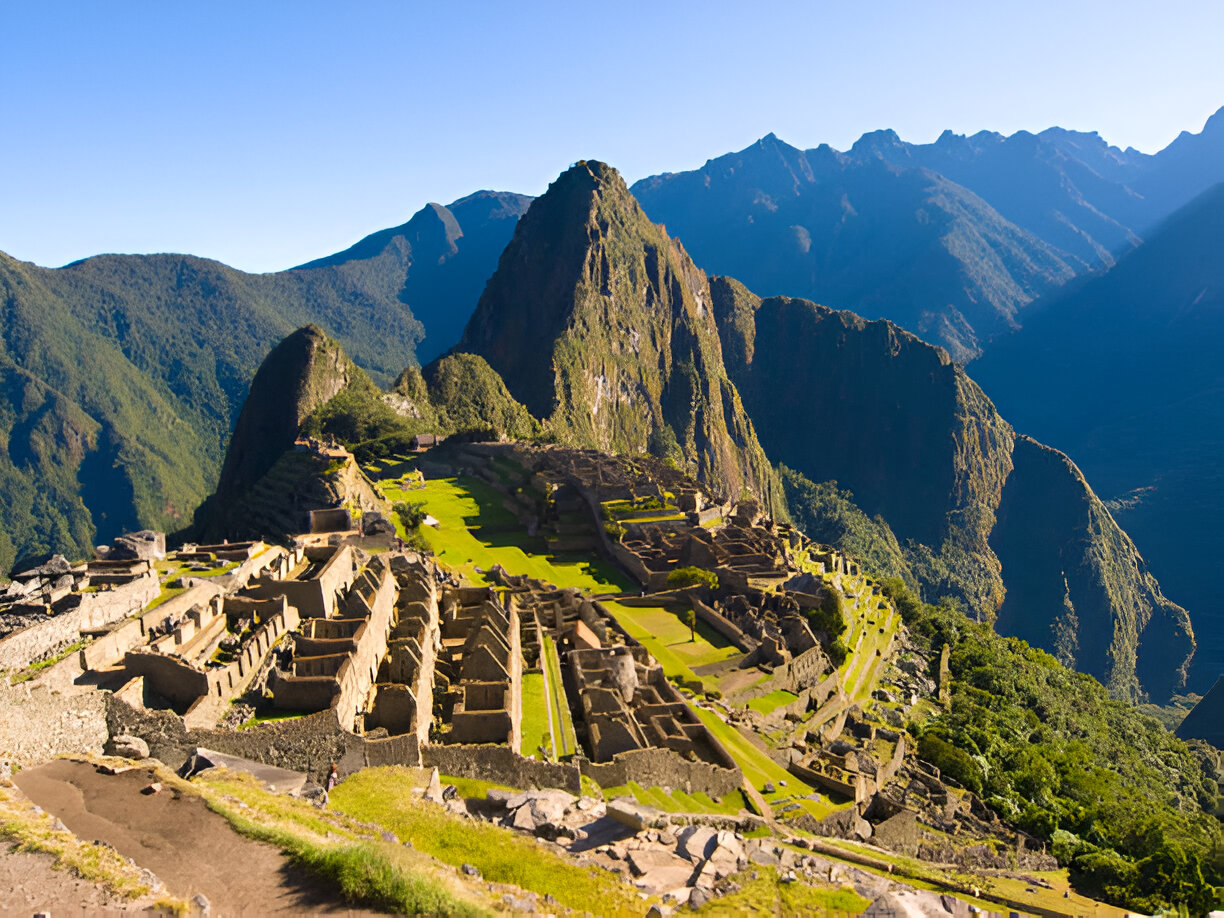
Machu Picchu doesn’t stand alone. The citadel sits on a saddle between two peaks — Huayna Picchu to the north and Machu Picchu Mountain to the south — and the whole site is wrapped in the Vilcabamba range. For many visitors the mountains are as memorable as the ruins.
Huayna Picchu is the famous one. At 2,692 m (8,835 ft), it’s the sharp peak above the citadel in every photograph. The climb is a steep hour-plus on narrow Inca-cut steps, and the permit is capped at around 400 a day — book weeks ahead in high season. The view from the top looks straight down on Machu Picchu.
Machu Picchu Mountain, on the other side of the complex at 3,082 m (10,111 ft), is the longer but less-trafficked climb. It’s a wider, more gradual trail; the top gives you a view across the whole site plus the Vilcabamba range to the west. Permits are easier to get than Huayna Picchu’s.
Both climbs are above 2,400 m, so acclimatise in Cusco first and carry water. A guide isn’t required but helps with pacing. Peruways packages the mountain permit with the main Machu Picchu entry, shuttle and train — easier than booking the pieces separately.
The mountains are what make Machu Picchu feel like Machu Picchu. Either climb is worth the effort if you have the legs and the altitude under control.