Machu Picchu sits at 7,970 ft (2,430 m) above sea level — high enough to matter, not high enough to be dangerous for most travellers. Here’s what to plan for.
Most visitors fly into Cusco first. Cusco is actually higher than Machu Picchu — 11,152 ft (3,399 m) — which is where altitude symptoms (headache, shortness of breath, nausea) typically hit. Give yourself two days in Cusco or in the lower Sacred Valley before pushing on to the citadel; the acclimatisation holds and Machu Picchu will feel comfortable by comparison.
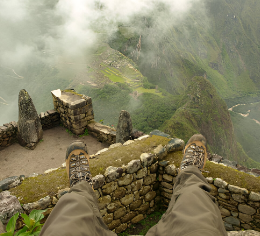
Up at the site, the elevation produces a specific cloud-forest ecosystem — orchids, hummingbirds, occasional spectacled bear — that’s part of what the place feels like. If you want to go higher, Huayna Picchu adds 8,835 ft (2,693 m) of altitude and a steep climb. Permits for Huayna Picchu are capped and sell out weeks ahead.
Book the trip through Peruways — they handle the Cusco–Sacred Valley–Machu Picchu sequencing so acclimatisation falls into place rather than being an afterthought.
Machu Picchu at altitude is still Machu Picchu. Prepare for it, pace yourself the first day, and the site opens up without the dizziness that catches off-guard visitors.