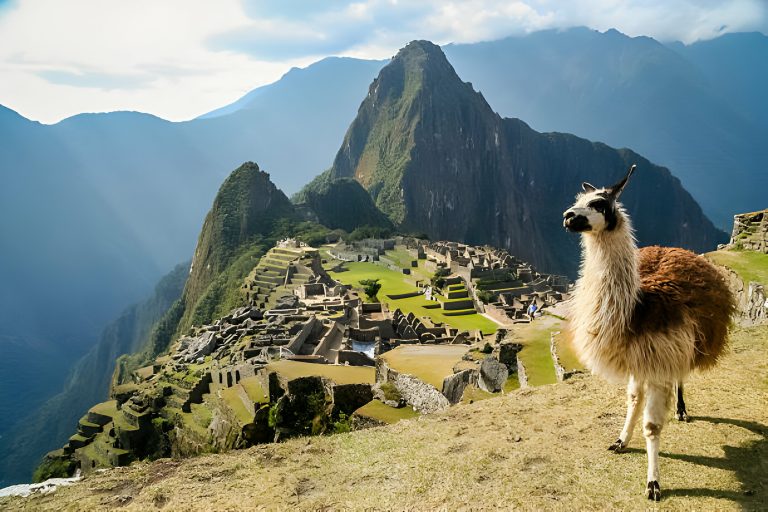
Why the Incas built Machu Picchu is still, five centuries on, an open question. The site has yielded clues rather than answers — a royal estate of some kind, religious buildings, agricultural terraces, housing for a few hundred people. Modern scholarship has narrowed the field without closing it.
- A royal estate. The leading current theory, built on 1980s work by John Rowe at Berkeley, holds that Machu Picchu was Pachacuti’s personal estate — a working country residence for the emperor and his lineage (panaca) rather than a public ceremonial centre. Dating of the stonework to the 1450s matches Pachacuti’s reign.
- An astronomical site. The Torreon’s solstice window, the Intihuatana’s cardinal alignments, and the Three Windows framing the June sunrise all point to astronomical observation as part of the site’s function. Whether this was priestly specialist work or part of broader royal ritual is still debated.
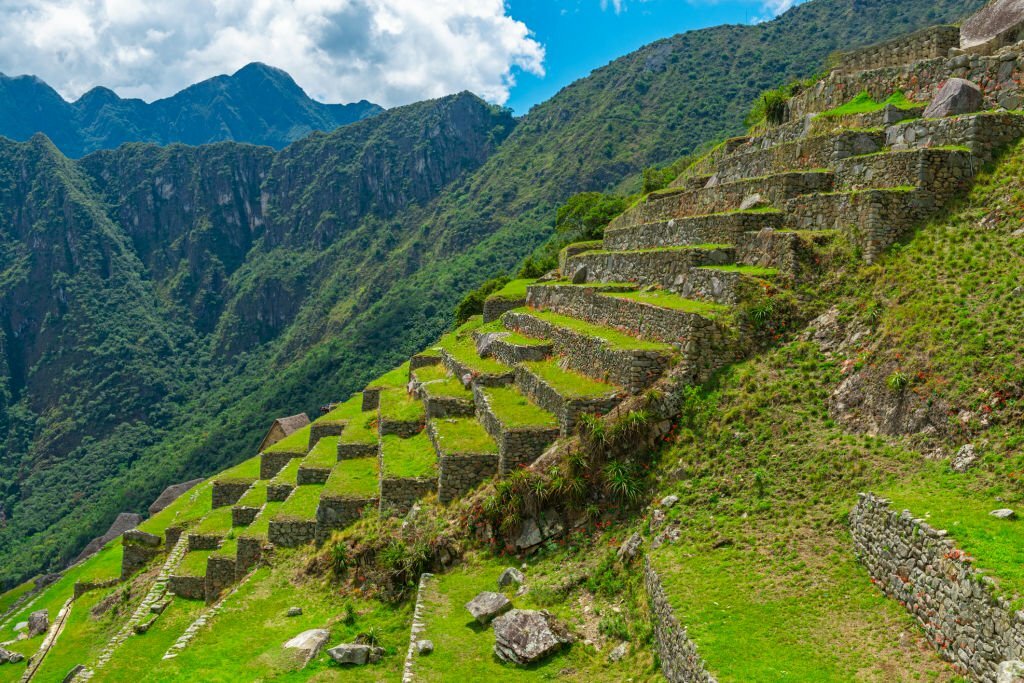
- Agricultural experiment. The terraces that climb the ridge below the urban sector were productive — they grew maize and probably other grains — but they were also a demonstration of Inca engineering. The nearby Moray terraces, which hold microclimates in their circular bowls, suggest the Incas ran what we would now call agricultural research stations.
- Ceremonial centre. The density of ritual buildings in the upper sector — Torreon, Three Windows, Sacred Plaza, Intihuatana — suggests regular ceremonial use. The Royal Tomb below the Torreon likely held mummy bundles of Pachacuti’s lineage.
- Observatory. The alignments at the Torreon and Three Windows let the Incas track the solar year with precision. Whether the site was used for ongoing observation or only for solstice ceremonies remains unclear.
- Residential core. Housing for perhaps 500-750 people — priests, administrators, servants, agricultural workers — suggests a working settlement rather than a purely ceremonial site. Pottery and animal bone finds confirm regular habitation.
Pachacuti’s successors used the estate for about a century; Spanish records show it was already abandoned when the conquest reached Cusco in 1532. The jungle hid it until Hiram Bingham, guided by local farmers, re-surveyed the ruins in 1911.