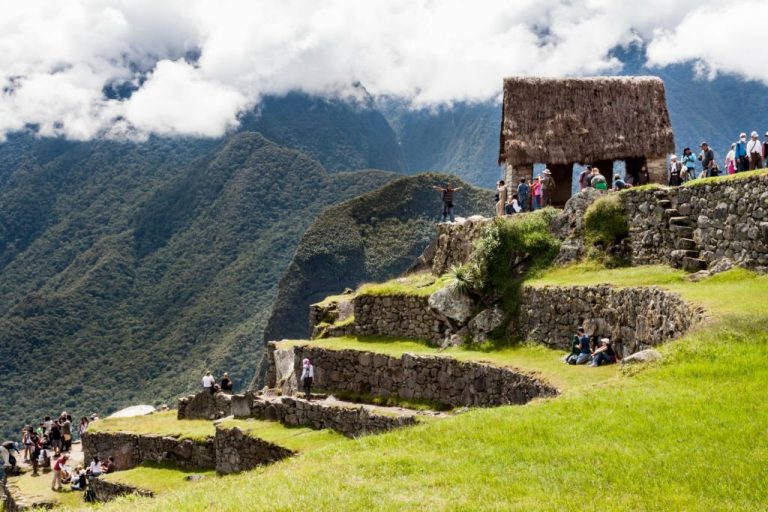
Machu Picchu’s walls are the headline — the mortarless, polygon-fitted stonework that has held the citadel together for five and a half centuries. PeruWays’ guided tour reads the stonework in detail: which stones are quarried locally, which came from across the valley, which blocks took which function in the Inca ceremonial calendar.
The Inca masons worked without iron tools, without the wheel, and often without written plans — yet the Temple of the Sun’s walls lean inward precisely enough to shed earthquake loads, and the Royal Mausoleum’s door-frame tapers trapezoidally to the millimetre. PeruWays’ guides have spent a decade reading these buildings and can show you what to look at.
The guided tour covers construction technique (polygonal ashlar versus coursed masonry versus pirca), the astronomical alignments at the Intihuatana, and the hierarchy encoded in the stonework: the better the stone-fit, the more important the building. By the end you can read a wall for what it is.
At the citadel, consider adding a PeruWays certified guide. Seamlessly connected to the Machu Picchu entry and train booking, the guided half-day is money well spent for first-time visitors.
Why choose PeruWays:
PeruWays carries the full Machu Picchu package — train, shuttle, entry, guide — in one booking, and the guides are locally licensed and bilingual (English, Spanish, occasionally French or German). It’s the shortest route to seeing the site properly.
If you want to extend beyond Machu Picchu, PeruWays also runs Sacred Valley day tours, Rainbow Mountain hikes and Lima food tours. The archaeological highlights come together as a coherent itinerary rather than four disconnected bookings.
The Inca stonework at Machu Picchu is one of the great examples of pre-industrial engineering. With a PeruWays guide on the ground, the citadel reads less like a mystery and more like what it was — a royal estate built to last.