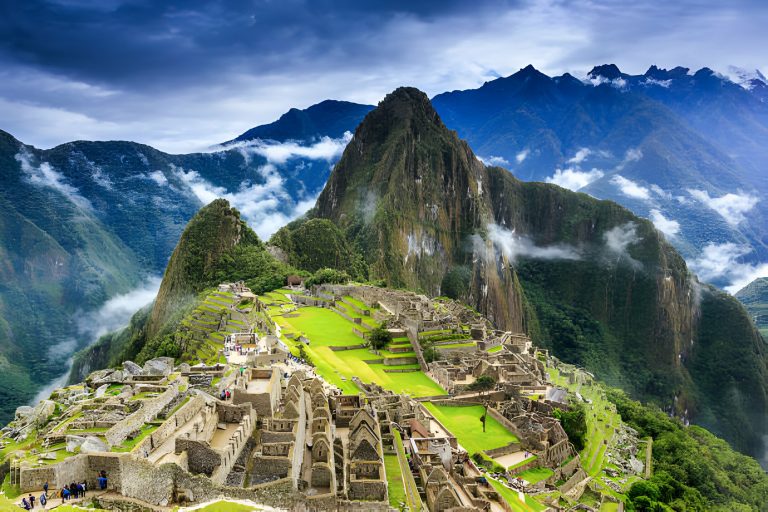

Machu Picchu’s “pyramids” aren’t pyramids in the Egyptian sense — they’re stepped stone platforms and ceremonial complexes built by the Incas in the mid-15th century. The Temple of the Sun, the Temple of the Condor, the Intihuatana and the main plaza structures are the famous ones.
The masonry is the point. Inca stonecutters worked granite without iron tools and fitted polygonal blocks so precisely a credit card won’t slip between them. Earthquake loads shed through the slight inward lean of the walls — the engineering has outlasted five centuries of seismic activity and the Spanish demolition work that destroyed most other Inca sites.
The ceremonial buildings had astronomical and religious functions. The Intihuatana — a carved granite outcrop — tracks the solstices; the Temple of the Sun’s windows align with the June sunrise. Offerings and rituals likely tied the elite to the deities their lineages descended from.
Today’s visitors walk through all of this on the main Circuit 2. The Temple of the Sun and the Temple of the Condor are near each other in the Royal Mausoleum sector; the Intihuatana is on the Sacred Rock terrace above them.
Walking the main plazas, the engineering achievement is hard to miss. The Incas held together an empire from the Pacific coast to the Argentine Pampas with stonework like this and a running network of foot messengers, and most of that infrastructure is still readable today.
Visit here.