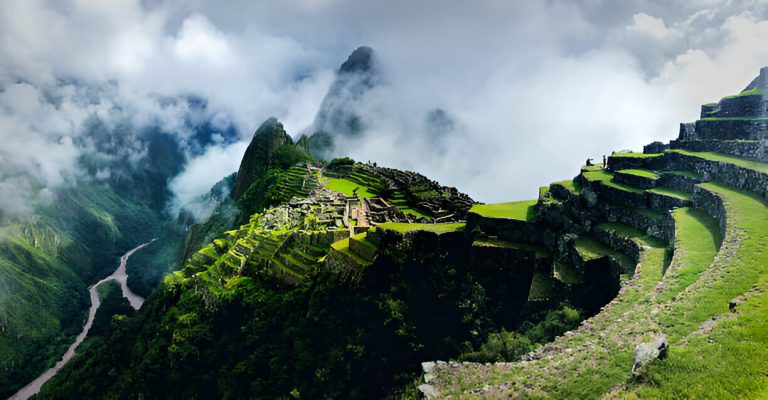

Machu Picchu’s walls are the clearest surviving example of Inca ashlar masonry — polished granite blocks cut to shape and fitted without mortar. The best of them, in the Royal Tomb and the Torreon, meet so precisely that a credit card doesn’t slide between them. Five centuries of earthquakes have moved the walls without cracking them.
The stone came from local quarries on the ridge itself; a half-worked block visible from the main plaza shows the stage at which they were split and dragged. The blocks were shaped with harder stone hammers — bronze-age tools, no iron — and polished with sand.
Each structure carries function and ritual together. The Three Windows frame the June solstice sunrise over the Urubamba gorge; the Intihuatana is carved from a single boulder and marks solstices and equinoxes; the Sacred Plaza anchors the upper ceremonial sector against the Temple of the Sun.
Peruways runs guided walks that read the stonework in context — which blocks were quarried on site, which style of fit was used for ceremonial versus residential buildings, how the Incas moved stones weighing many tons across the ridge without wheels or draught animals.