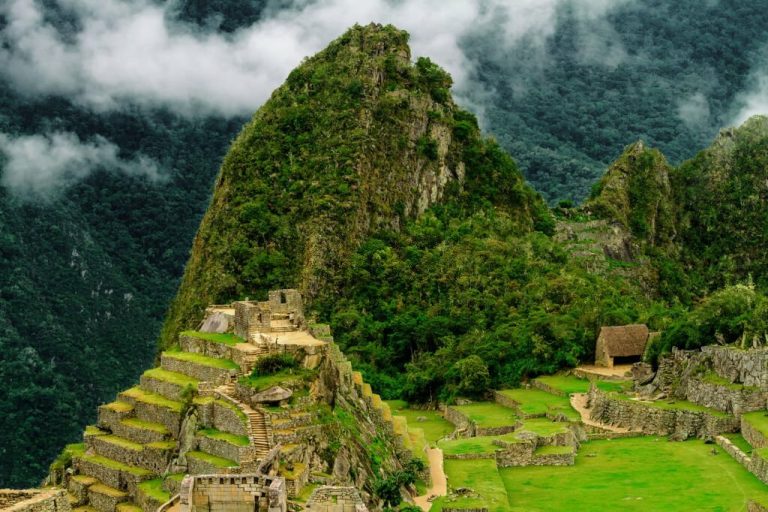

Walk Machu Picchu and most of your day is spent on stairs. The citadel is stitched together by stone flights that climb from the terraces up to the ceremonial core and out to the Sun Gate — the Inca took a steep ridge and made it legible with masonry.
The steps had two jobs. They connected working zones (terraces, kitchens, baths) to ritual ones (the Temple of the Sun, the Intihuatana, the three-window temple), and they set the rhythm of movement through a city with no wheels and no draft animals.
Climbing them, you notice the fit — stones shaped so precisely that no mortar was needed, with slight inward lean to resist earthquakes. The acoustics change in the plazas; the gradient eases at the ritual fountains. It’s a city designed to be walked.
Peruways arranges guided visits that pace the route to the altitude (2,430 m) and the heat, so you see the quieter corners — the eastern residential sector, the back terraces — rather than only the postcard viewpoint.