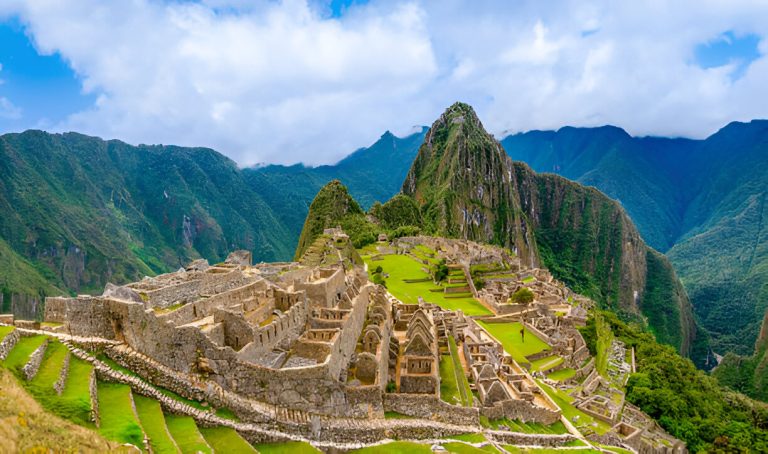
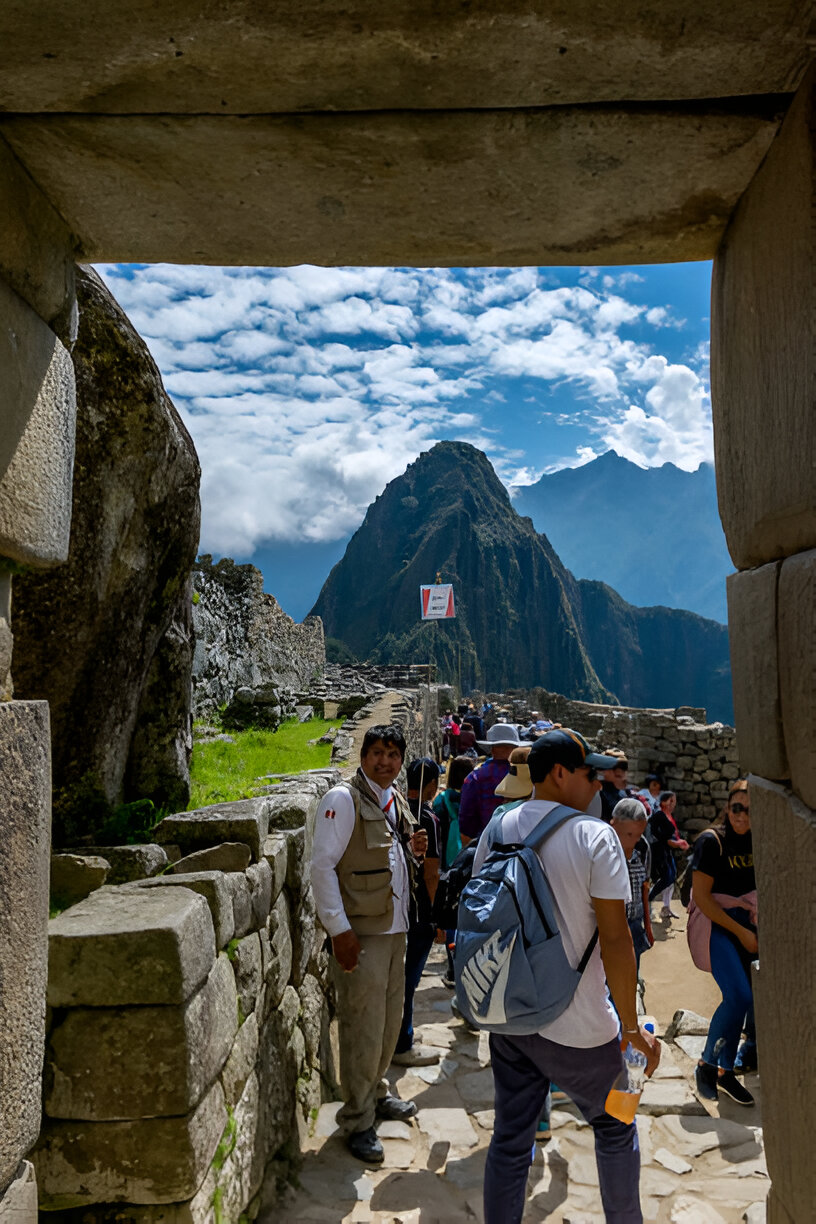
Hiring a guide at Machu Picchu is close to mandatory — the site’s current rules require a licensed guide for first-time visitors on the main circuits, and the archaeology isn’t legible on the signage alone.
A good guide reads the site for you. The Intihuatana ritual stone’s alignment with the June solstice, the engineering of the water channels still running under the main plaza, the function of the Temple of the Three Windows — these are the stops where a guide earns the fee. Without one, the citadel reads as architecture; with one, it reads as a working civilization’s purpose-built royal estate.
Guides also handle the practical layer: which circuit avoids the main tour-group wave, when to hit the Temple of the Sun before the midday crowd, where to catch the best light. On a two-to-three-hour visit, that’s the difference between seeing Machu Picchu and photographing it.
Guides work in multiple languages (English, Spanish, French, German, Portuguese are common) and run either in small groups or privately. Private is worth the premium if you want pace flexibility.
For guide bookings paired with the surrounding transport chain — train, bus, entrance — see Peruways. Peruways’ guides are Ministry-of-Culture certified and current on recent site archaeology.
A guide is the single highest-value add-on at Machu Picchu. Everything else at the site is already remarkable — the guide is what makes you understand why.