
Andean cosmology is full of creatures that aren’t quite animals and aren’t quite gods — figures the Quechua and Aymara still invoke in ceremony, farming calendars and festival dances. A short field guide.
1. Amaru:
The two-headed or feathered serpent. Amaru connects the three worlds of Inca cosmology (hanan, kay, uku pacha) and governs water, fertility and transformation. Associated with lakes, rivers and the springs that feed them.
2. Supay:
Ruler of the underworld, uku pacha. Pre-Hispanic Supay wasn’t evil in the Christian sense — he governed the dead and the mineral wealth of the earth. Post-conquest syncretism mapped him onto the devil, which stuck in colonial art.
3. Aya Uma:
A two-faced spirit figure that appears in highland dances with a horned mask and long ribboned hair. Protector of crops, trickster, lead dancer in festival processions.
4. Ccoa (Qoa):
A mountain cat-spirit that lives in the high peaks and brings hail, lightning and rain. Herders propitiate the Ccoa with offerings before the planting rains in October–November.
5. Huiraccocha (Wiracocha):
The pre-Inca creator deity, god of water and foam. Wiracocha emerged from Lake Titicaca and shaped the world and the first humans. The term is still used in Quechua as a respectful address for an older man.
6. Encountering them in Peru:
The creatures live in textile motifs, pottery and dance across the Andes. Pisac market, the Inti Raymi procession in Cusco each 24 June, and the Qoyllur Rit’i pilgrimage above Ocongate all put the pre-Hispanic bestiary on display next to Catholic iconography. They coexist without any obvious strain.
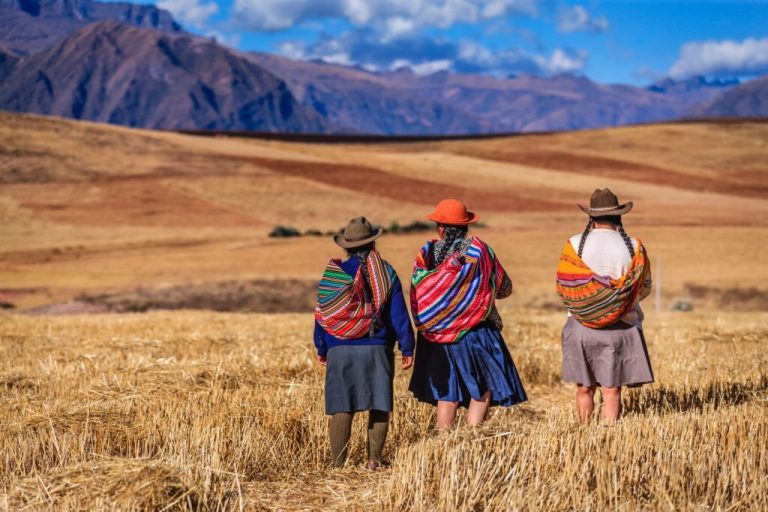
Peruways can route a Peru trip through the places where this cosmology is still active — the Sacred Valley weaving communities, the Qeros villages above Ocongate, the Titicaca islands — rather than only the headline ruins.
Plan and book with Peruways!