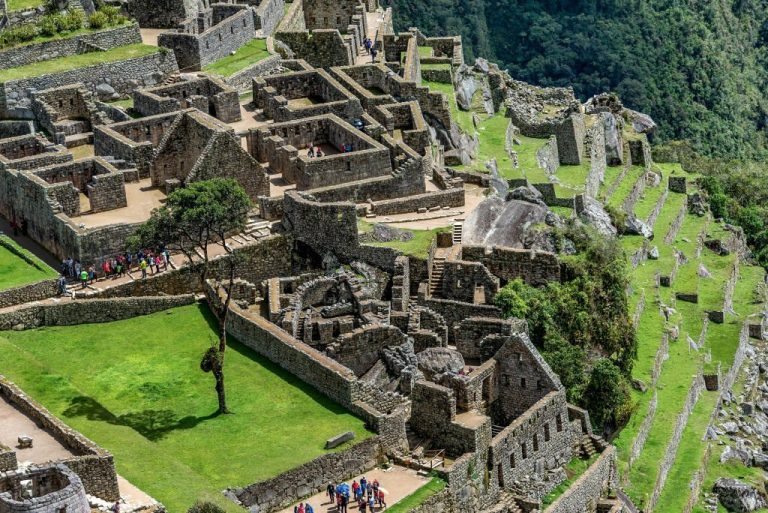
Machu Picchu sits at the edge of the cloud forest, where the Andes drop into the Amazon basin. The site’s elevation range (around 2,000–3,000m across the citadel and surrounding peaks) covers several microclimates, and the plant list is correspondingly dense.
1. Orchids: Peru has around 3,500 known orchid species, and the Machu Picchu sanctuary alone holds over 400. Most flower in the shoulder seasons (April–May and October).
2. Bromeliads: The rosette-shaped epiphytes mostly grow on the trees around the citadel’s edges, where humidity is highest.
3. Ferns: Dense in the lower, shaded zones, especially around the water channels.
4. Puya raimondii: The giant Andean bromeliad — up to 10m tall when it flowers once in 80–150 years. Found in the higher-altitude zones around the sanctuary.
5. Fuchsia: Several native species, including Fuchsia magellanica, grow along the trails. Hummingbirds work them for nectar.
6. Wild begonias: Small, with pink and white flowers, mostly in the shaded trail sections.
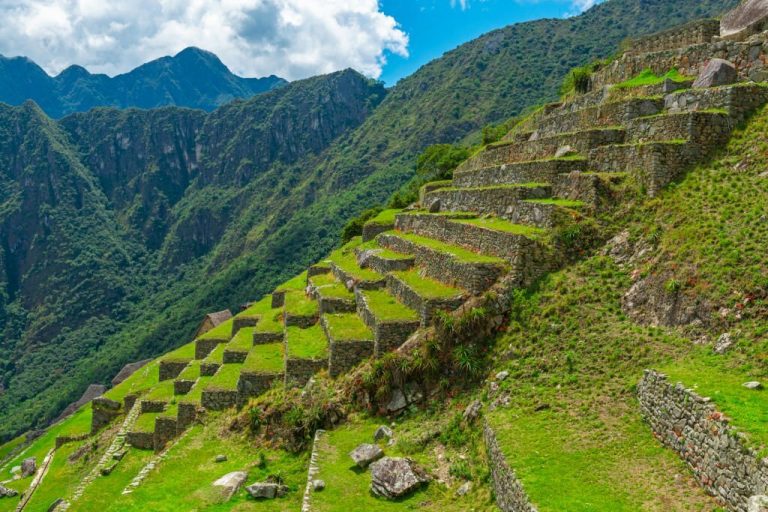
7. Ichu grass: The tough bunchgrass of the puna, growing on the terraces and the open ridges.
8. Polylepis: The highest-altitude tree genus in the world — the small, twisted trees above 3,000m.
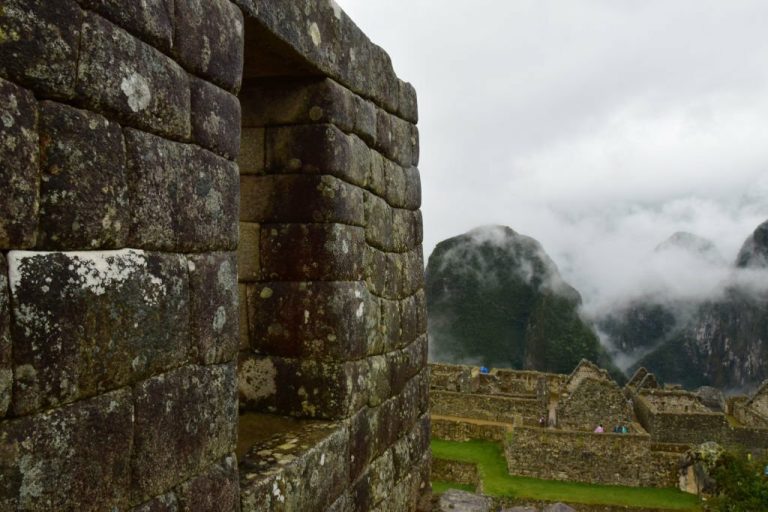
9. Moss and lichens: Dense on the stones in the wetter corners, part of why the site reads as ancient.
10. Medicinal plants: Coca, muña (an Andean mint used for altitude), and chacruna (one of the DMT-containing plants used in ayahuasca).
Guides from Peruways can point out the main species on the walk through the citadel.