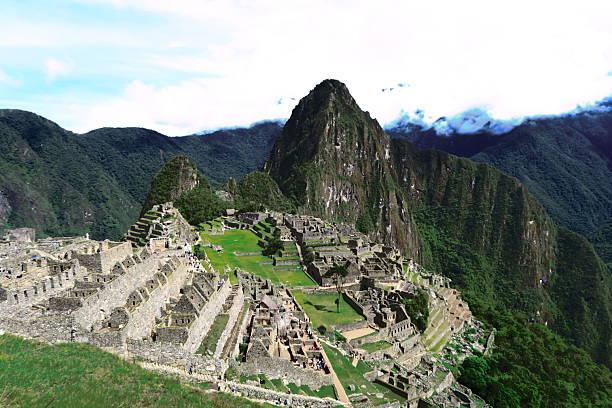
Perched high in the Andes at 2,430 meters above sea level, Machu Picchu was far more than a royal retreat. Rather, it functioned as a powerful symbol of how politics and religion were seamlessly united in the Inca state. In the world of the Tahuantinsuyo, governance was sacred, authority was divine, and architecture itself expressed cosmic order. Consequently, this extraordinary citadel must be understood not only as an archaeological wonder but also as a living statement of imperial ideology.
A Sacred Foundation of Power
To begin with, Inca political authority rested on religious legitimacy. The emperor, known as the Sapa Inca, was believed to be the direct descendant of Inti, the Sun God. Therefore, ruling the empire was not merely an administrative duty; it was a sacred responsibility. Every major political decision carried spiritual meaning, and every major religious ceremony reinforced state power.
In this context, Machu Picchu embodied the unity of church and state. For example, the Temple of the Sun was carefully designed with windows aligned to significant solar events. During solstices, sunlight would enter the temple at precise angles. Thus, astronomy, ritual, and architecture worked together to demonstrate divine harmony.
Similarly, the Intihuatana stone likely functioned as a ceremonial and astronomical marker. Its name, often translated as “the hitching post of the sun,” suggests a symbolic act of anchoring cosmic forces. In other words, priests did not simply observe the heavens; they ritually connected the empire to them.
Political Strategy and Imperial Vision
At the same time, Machu Picchu served clear political purposes. Most scholars attribute its construction to Pachacuti, the visionary ruler who dramatically expanded the empire in the 15th century. Under his leadership, the Incas transformed from a regional power into a vast Andean state. Consequently, monumental projects such as this citadel reinforced both territorial control and imperial prestige.
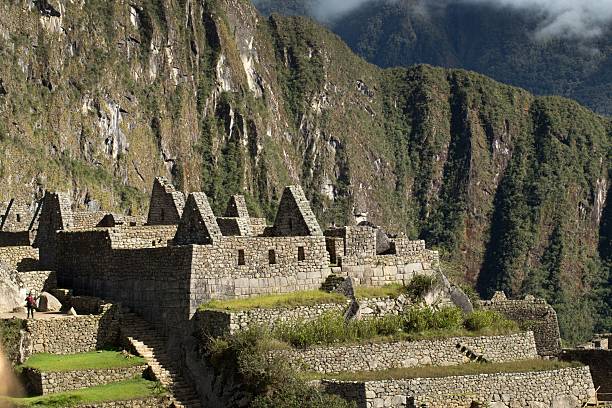
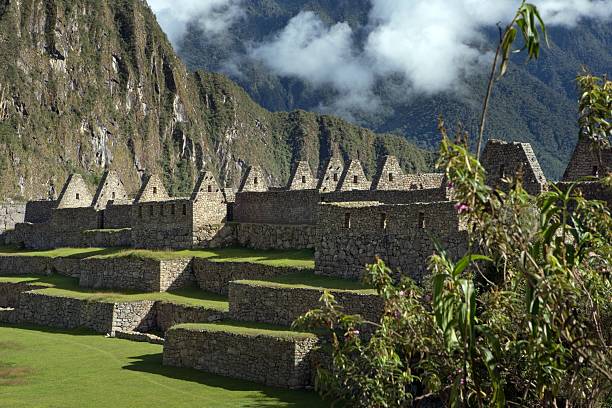
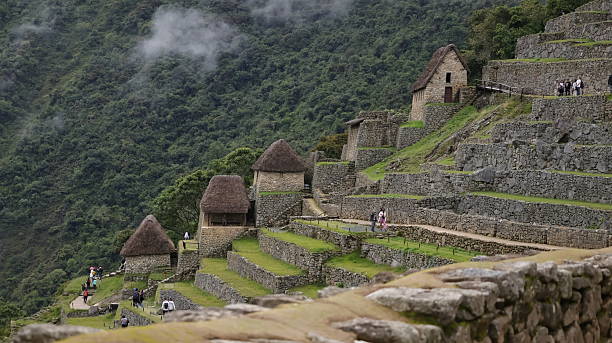
Moreover, the site’s organization reflected social hierarchy. Ceremonial and elite sectors occupied the highest terraces, while agricultural and residential areas lay below. This vertical arrangement symbolized the structured order of Inca society. Meanwhile, finely engineered terraces ensured agricultural productivity, demonstrating that spiritual authority was matched by practical governance.
In addition, Machu Picchu’s remote location strengthened imperial influence in distant regions. By building a sacred and political center far from Cusco, the Inca heartland, the state extended its ideological presence across diverse territories. Therefore, the citadel functioned not as isolation, but as integration.
Sacred Geography and Cosmic Order
Equally important was the landscape itself. The Incas believed that mountains, or apus, were living spiritual beings. Accordingly, Machu Picchu was strategically positioned among dramatic peaks and above the Urubamba River. This placement was not accidental. Instead, it embedded political authority within sacred geography.
Furthermore, the harmony between stonework and surrounding mountains reveals an architectural philosophy rooted in respect for nature. Buildings were shaped to complement the terrain rather than dominate it. As a result, the site expressed balance between humanity and the cosmos — a balance that legitimized imperial rule.
Experience the Legacy Today
Ultimately, Machu Picchu stands as a powerful testament to the Inca vision of a world where governance, spirituality, astronomy, and landscape formed a single, unified system. Its terraces, temples, and ceremonial spaces continue to echo the sophisticated worldview of one of history’s greatest civilizations.
If you are ready to walk through this sacred citadel and experience its history firsthand, visit https://peruways.com to book your unforgettable journey. Let the legacy of the Inca Empire inspire your next adventure.