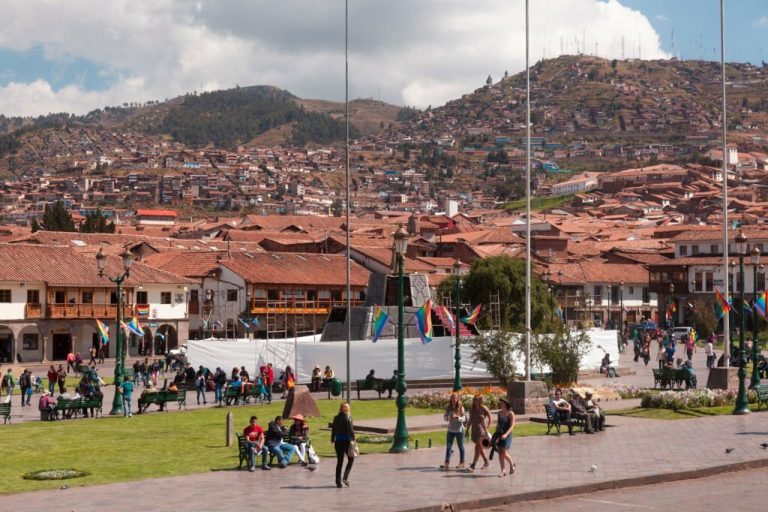
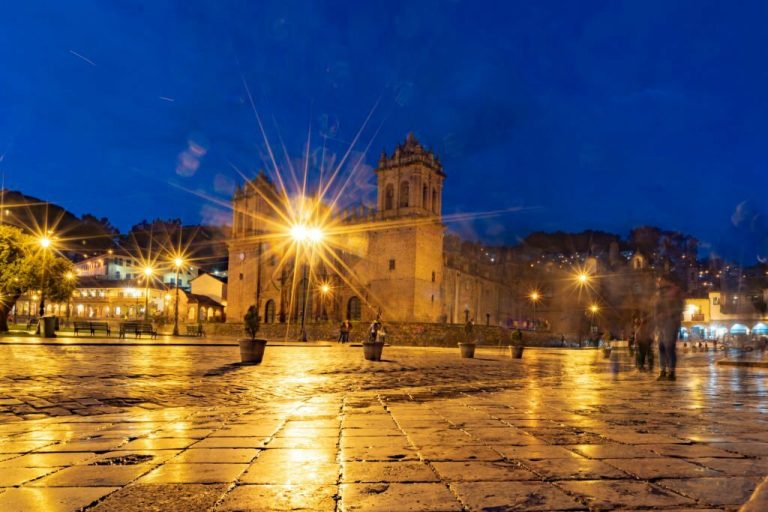
The “Sons of the Sun” is the English rendering of the title Intip Churin, carried by the Sapa Inca — the emperor who ruled from Cusco and claimed direct descent from Inti, the sun god. That genealogy was the Inca Empire’s founding claim to legitimacy, and it shaped the empire’s religion, politics and architecture.
The divine link. In Inca cosmology Inti sat at the centre of the state religion. The Sapa Inca was his descendant on earth, which gave him religious authority alongside the political one.
Political power. The Sapa Inca ran a state that stretched from southern Colombia to northern Chile. His divine ancestry justified the mit’a labour system, the state redistribution of grain, and the military expansion under Pachacuti and Topa Inca in the 15th century.
Coronation. New emperors were crowned at the Qoricancha in Cusco — the Sun Temple whose stonework the Spanish later built the church of Santo Domingo on top of. The ceremony included offerings to Inti and ritual acts that formally transferred the divine lineage.
Royal residences. The Sapa Inca lived in palaces around Cusco — the Qoricancha was the ceremonial centre. Later rulers built their own compounds; the empire kept the previous emperor’s palace in use for his descendants after his death, so Cusco accumulated royal estates generation by generation.
The Qhapaq Ñan. The Inca road network — some 40,000 kilometres of it, running the length of the empire — carried the emperor, his representatives, and the chasqui runner-postmen between ceremonial sites. Shrines (huacas) along the roads marked points of ritual significance.
Inti Raymi. The Festival of the Sun, held at the June solstice, was the biggest ceremony of the Inca calendar. The Sapa Inca led offerings at Sacsayhuaman above Cusco; the ritual is still re-enacted every 24 June.
Decline. Francisco Pizarro’s expedition captured Atahualpa at Cajamarca in 1532 and executed him the next year. Resistance continued from Vilcabamba until 1572, when the last Sapa Inca, Túpac Amaru, was executed in Cusco.
Cultural legacy. Quechua communities in the Andes still celebrate Inti Raymi, carry out despacho offerings to Pachamama, and maintain ritual calendars tied to the agricultural year.
Machu Picchu. Built by Pachacuti as a royal estate around 1450, Machu Picchu is one of the clearest surviving examples of Inca state architecture. Its Temple of the Sun and Intihuatana show the astronomical alignments the Sons of the Sun built their calendar around.
The empire fell. The ideas and the stonework are still here. Book here.